
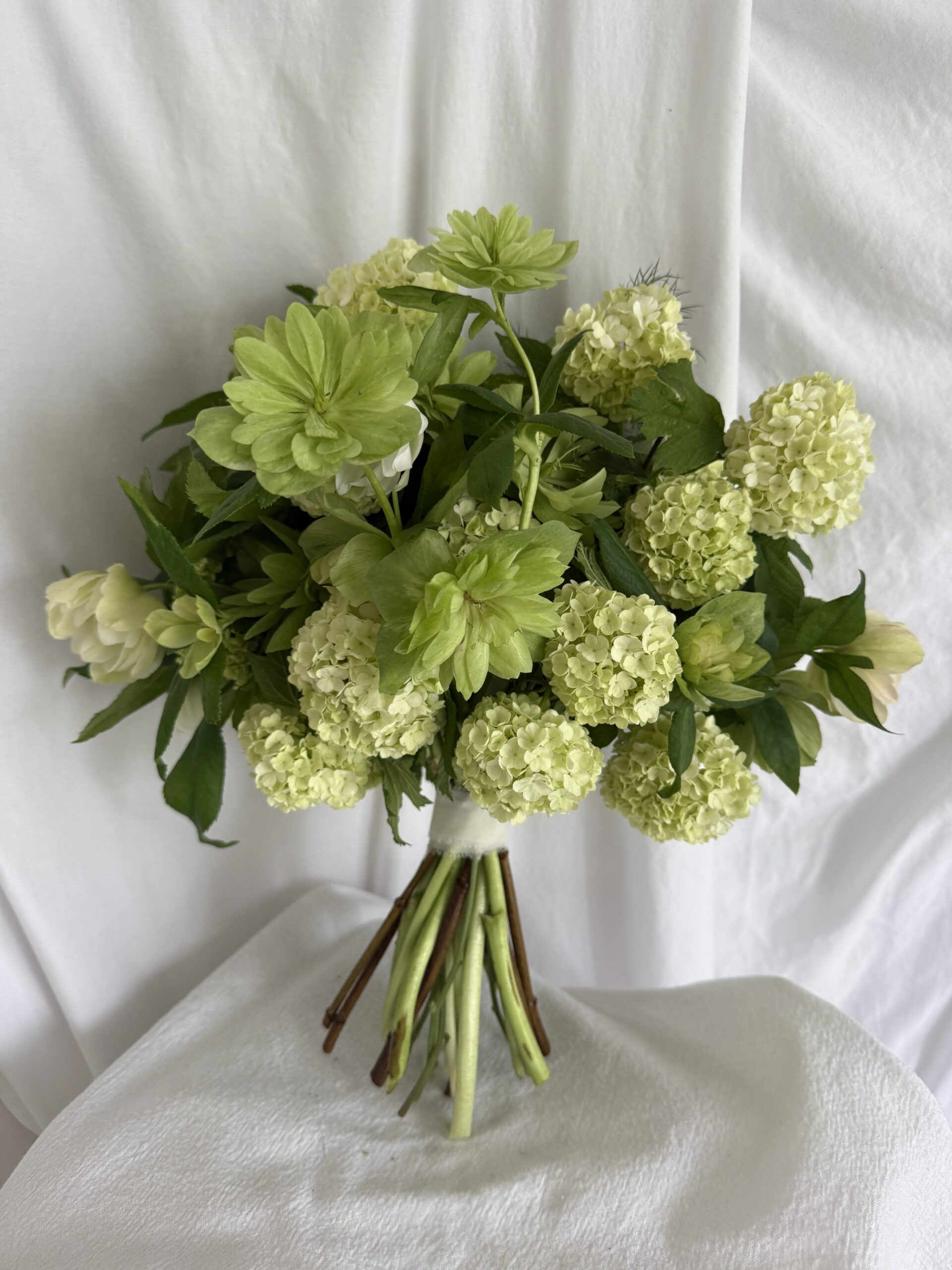
There is something profoundly different about a flower that has been grown slowly, deliberately, and close to home.
Not just aesthetically — though that too. Garden-grown flowers often possess a looseness, fragrance, movement, and individuality that mass-produced flowers simply do not, but the difference goes deeper. It’s philosophical. It regards pace. It pertains to our relationship to the natural world.
For most of human history, flowers were seasonal. One had to wait for lilacs and anticipate peonies. Sweet peas belonged to a fleeting window in early summer, and dahlias announced the arrival of late August. Flowers marked time. They connected people to weather, geography, and the rhythms of the earth itself.
The business of modern floral commerce changed that. Today, many flowers are grown thousands of miles away, shipped internationally through highly industrialized supply chains, refrigerated for days or weeks, and bred primarily for durability in transport rather than fragrance, delicacy, or character. That system allows for extraordinary variety and year-round access, and as a florist working at scale, I rely on it too. There is no realistic way to produce big luxury weddings in Pittsburgh year-round using only locally grown flowers. The math simply does not work.
And yet.
Whenever possible, I return to my garden.
Because locally grown flowers possess a vitality that is difficult to replicate. A just-cut branch of mock orange, still carrying the inimitable scent of early June. A peony harvested at dawn before the heat sets in. Nicotiana that opens toward evening. Fragile Icelandic poppies whose petals would never survive cross-country shipping but are breathtaking for the brief hours they exist in the vase. These flowers feel alive in a different way. They are alive in a different way.
Here I’m cutting dahlias from the October garden. They’re a real labor of love and take months of careful attention. But they’re worth it! Dahlias absolutely do not ship.
Many of the most beautiful flowers do not ship well. They bruise easily. They wilt quickly. They open too fast. They bend. They drop petals. Industrial agriculture often treats those qualities as flaws. Gardeners understand them as part of a flower’s beauty.
There is also an intimacy to locally grown flowers that changes the work itself. When you grow flowers, or source from nearby growers you know personally, you begin to understand flowers not merely as products, but as living things shaped by weather, soil, insects, rainfall, timing, luck, and labor. You notice the difference between a cold spring and a warm one. You learn which roses collapse in the heat and which hold up. You understand why a stem costs what it costs because you have watched the months of tending required to produce it.
That knowledge creates a different kind of respect.
This late fall tablescape is made of dahlias and ‘Limelight’ hydrangeas from my gardens.
The current movement toward American-grown and locally grown flowers is not only about sustainability, though reducing transport and supporting domestic agriculture certainly matter. It is also a cultural shift away from disposability and toward seasonality, craftsmanship, and connection. People are increasingly hungry for things that feel rooted, specific, and real.
And flowers grown close to home often do.
They carry the fingerprints of the season they came from. They remind us that beauty is not infinitely reproducible on demand. Some of the most extraordinary flowers are extraordinary precisely because they are fleeting.
At the studio, I use both imported and locally grown flowers because both have value. Imported flowers allow scale, consistency, and access to extraordinary varieties year-round. But whenever I can incorporate flowers grown nearby — whether from my own garden or from regional growers — I do. Not out of purity or trendiness, but because they bring something emotionally and aesthetically irreplaceable to the work.
A garden flower asks you to pay attention.
And increasingly, that feels like a kind of luxury.


