
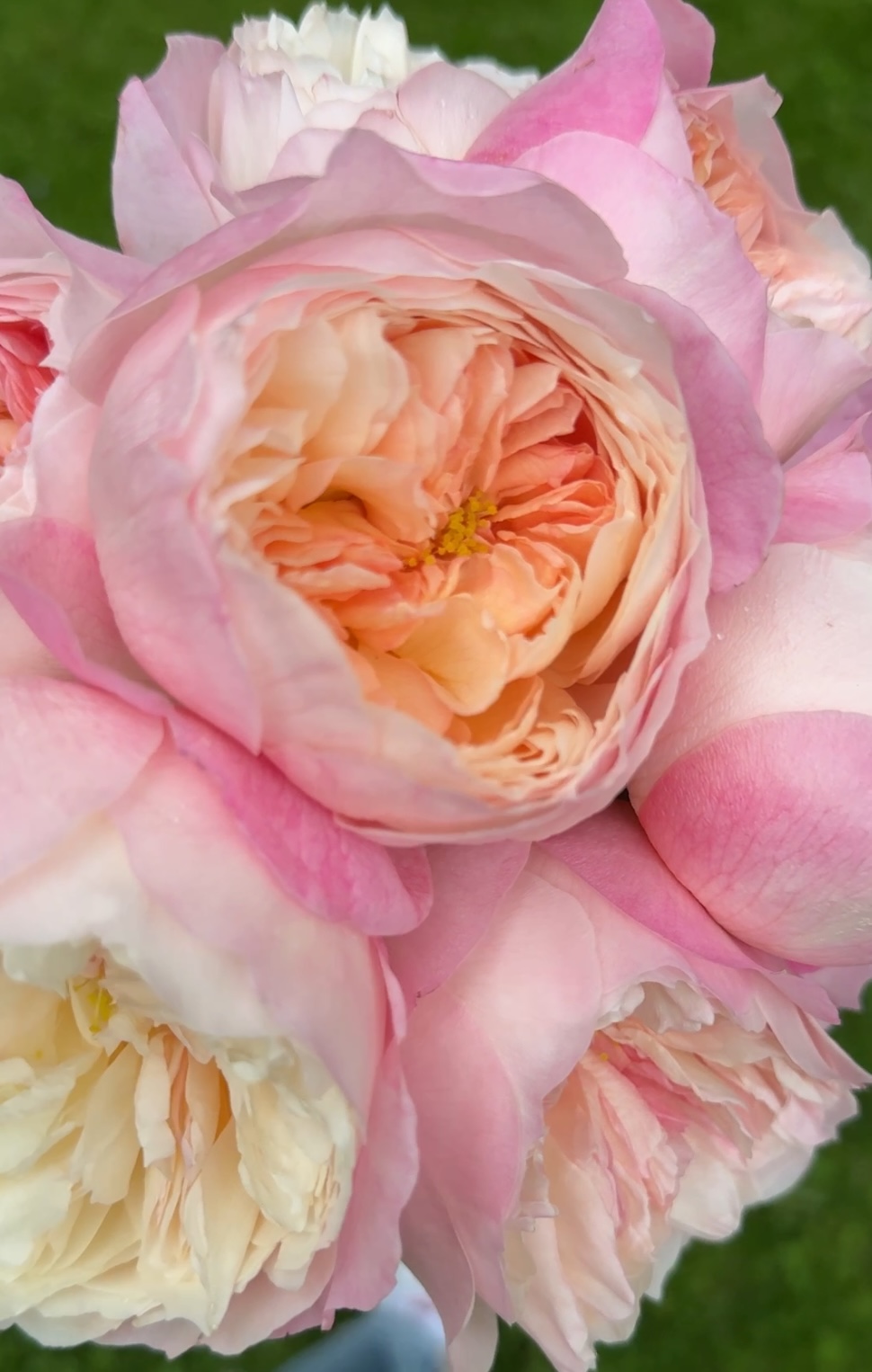
One of the most common questions put to florists — especially during wedding consultations — is why certain flowers cost dramatically more than others.
And honestly, that’s fair.
To someone outside the floral industry, a rose seems simply a rose. Flowers can appear interchangeable at first glance, especially online where scale, scent, bloom quality, stem count, and seasonality become flattened into a grid of images; however, the differences between flowers are enormous, both aesthetically and economically.
Some flowers are expensive because they are rare. Others because they are difficult to grow, difficult to transport, fragile, seasonal, labor-intensive, or simply because demand far exceeds supply at certain times of year.
And importantly: expensive flowers do not always create expensive-looking arrangements, while modest flowers used thoughtfully often can.
Garden Roses versus Standard Roses
This is perhaps the clearest example.
A standard grocery-store rose is typically bred for durability, shipping longevity, and uniformity. It is designed to survive long transport chains, refrigeration, handling, and retail display. The blooms tend to remain relatively tight and consistent in shape. These aren’t my favorite. I do fancy myself something of a flower snob; however, standard roses do sometimes make sense in my recipes. They cost me under a dollar wholesale.
Garden roses are different entirely, and here (as everywhere): you get what you pay for.
Many garden roses are heavily petaled, highly fragrant, irregularly shaped, and dramatically larger once opened. They bruise more easily. They open unpredictably. Their vase life is often shorter. They require more careful handling and conditioning. Some varieties are available only seasonally or in limited quantities.
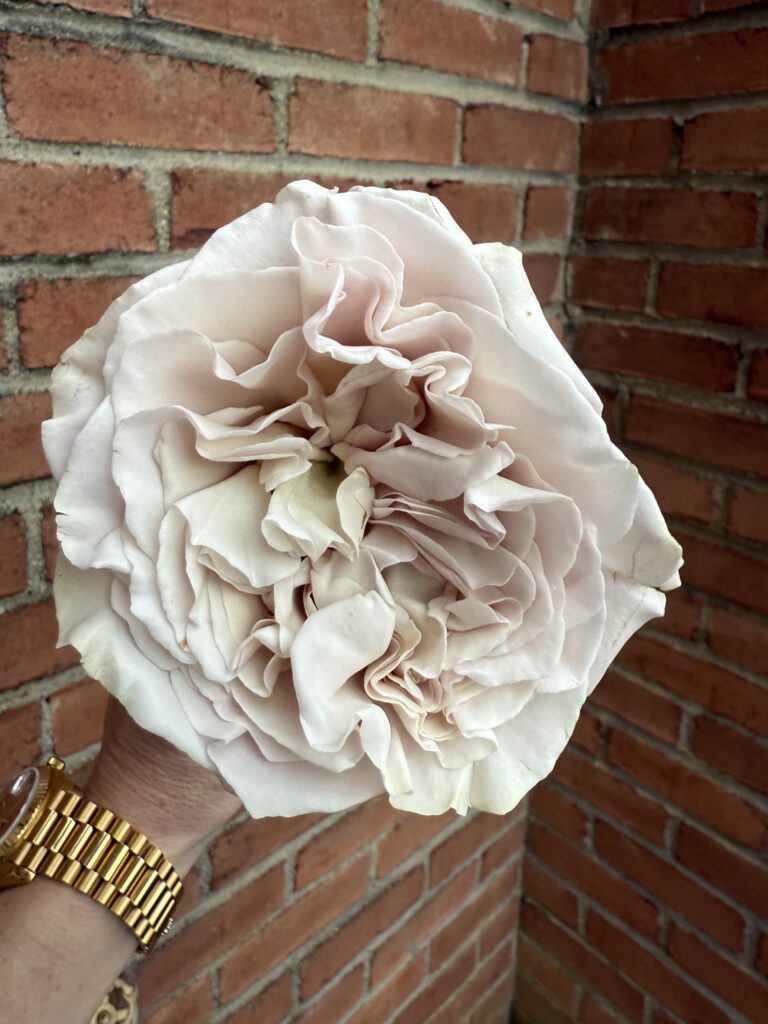
And visually, they behave differently too.
A reflexed Tibet rose and a fully opened White O’Hara do not communicate the same emotional experience in a room. One may feel clean and classic. The other feels lush, romantic, almost atmospheric. Garden roses create softness and movement that standard roses often cannot.
But that beauty comes with higher cost at nearly every stage of production.
Orchids
People are often surprised by the pricing of orchids because they associate them with grocery stores and potted plants. But cut orchids — especially high-quality phalaenopsis — occupy a completely different category.
Phalaenopsis orchids are expensive partly because they grow slowly and require significant care during cultivation. The blooms are delicate, highly susceptible to bruising, and must travel carefully through international shipping systems. Many arrive from Thailand, Singapore, or other overseas growers specializing in orchid production.
There is also simply nothing else that looks quite like them.
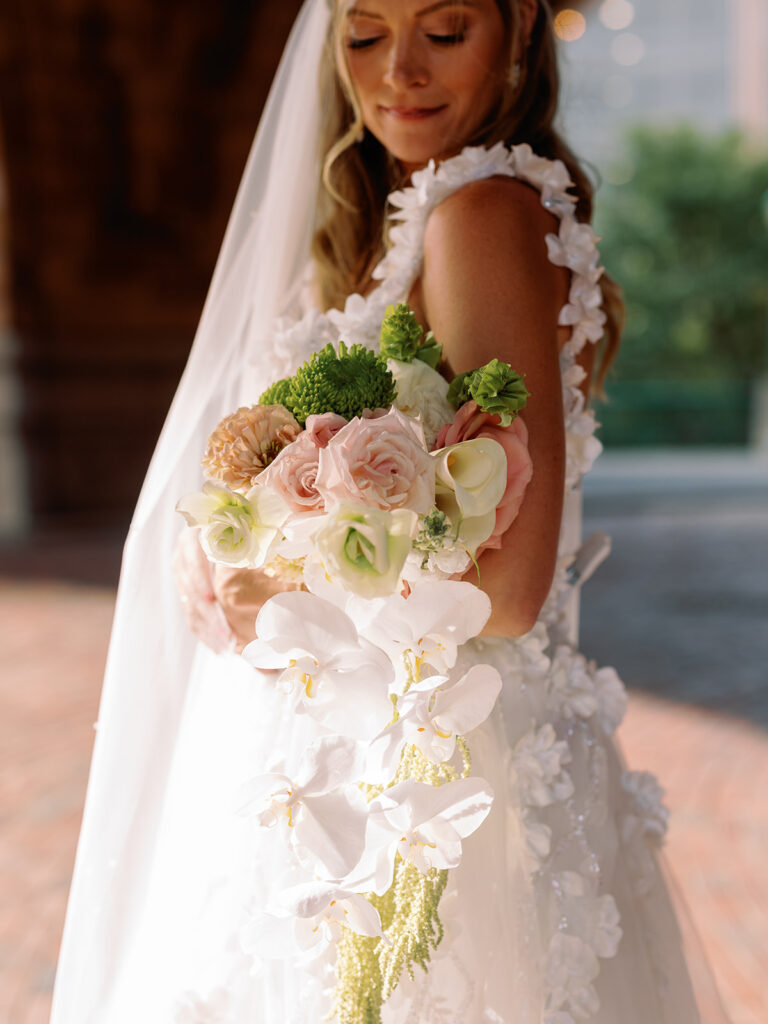
A cascading phalaenopsis stem immediately changes the emotional register of an arrangement. Orchids introduce line, space, movement, and sculptural elegance in a way very few flowers can. Their visual impact is disproportionately large relative to stem count, which is why even a few blooms can elevate an entire composition.
Anthurium
Anthurium has become increasingly popular in modern floral design, particularly in hospitality and editorial work, because it feels simultaneously tropical, sculptural, and architectural.
Good anthurium is expensive for several reasons:
- the blooms bruise easily
- shipping damage is common
- color consistency matters enormously
- and the best varieties are still relatively specialized within the market
Certain modern muted tones — chocolate, mauve, soft green, blush, rust — are especially sought after and therefore command higher prices.
Anthurium also occupies a unique design role. It is not filler. It becomes a focal material immediately. One stem can shift the entire feeling of an arrangement toward something more contemporary and fashion-oriented.
Protea
Protea often surprises people because it looks almost prehistoric compared to softer garden flowers.
Native largely to South Africa and Australia, protea are highly structural flowers with long vase life and dramatic presence. Many varieties require specific growing climates and lengthy cultivation periods. Shipping distance alone contributes significantly to pricing.
And again, scale matters.
One king protea may cost far more than a standard rose, but it also visually occupies the space of many stems at once. Protea are less about delicacy and more about sculptural impact.
The Hidden Costs Behind Flowers
What many people do not see is that floral pricing reflects far more than the bloom itself.
Flowers are influenced constantly by:
- weather events
- fuel prices
- labor shortages
- freight costs
- holidays
- global demand
- crop disease
- import delays
- seasonality
- perishability
- political unrest
Flowers arrive by plane. From across the world. They require fastidious care and constant refrigeration. Many survive only a matter of days once cut.
And once flowers reach my studio, the labor has only begun:
- conditioning
- processing
- hydration
- cleaning
- reflexing
- wiring
- installation preparation
- transportation
- on-site setup
A floral quote reflects not simply “buying flowers,” but managing living materials through an extraordinarily delicate chain of timing and care.
Expensive Is Not Always Better
One of the great misconceptions in floral design is that luxury comes from using only the most expensive flowers possible.
In reality, many stunning arrangements rely on contrast.
A single stem of phalaenopsis may matter more than fifty additional roses. Carnations, when thoughtfully composed, can feel remarkably elegant. Branches cut locally from a garden may create more atmosphere than imported blooms flown halfway around the world.
Luxury in flowers often comes less from rarity alone and more from intentionality: understanding proportion, movement, color, texture, restraint, and the emotional tone a composition creates in a space. That’s the artistry involved in all this, and the client should expect to pay for that, too.
The flowers themselves matter deeply. But how they are used matters even more.


