
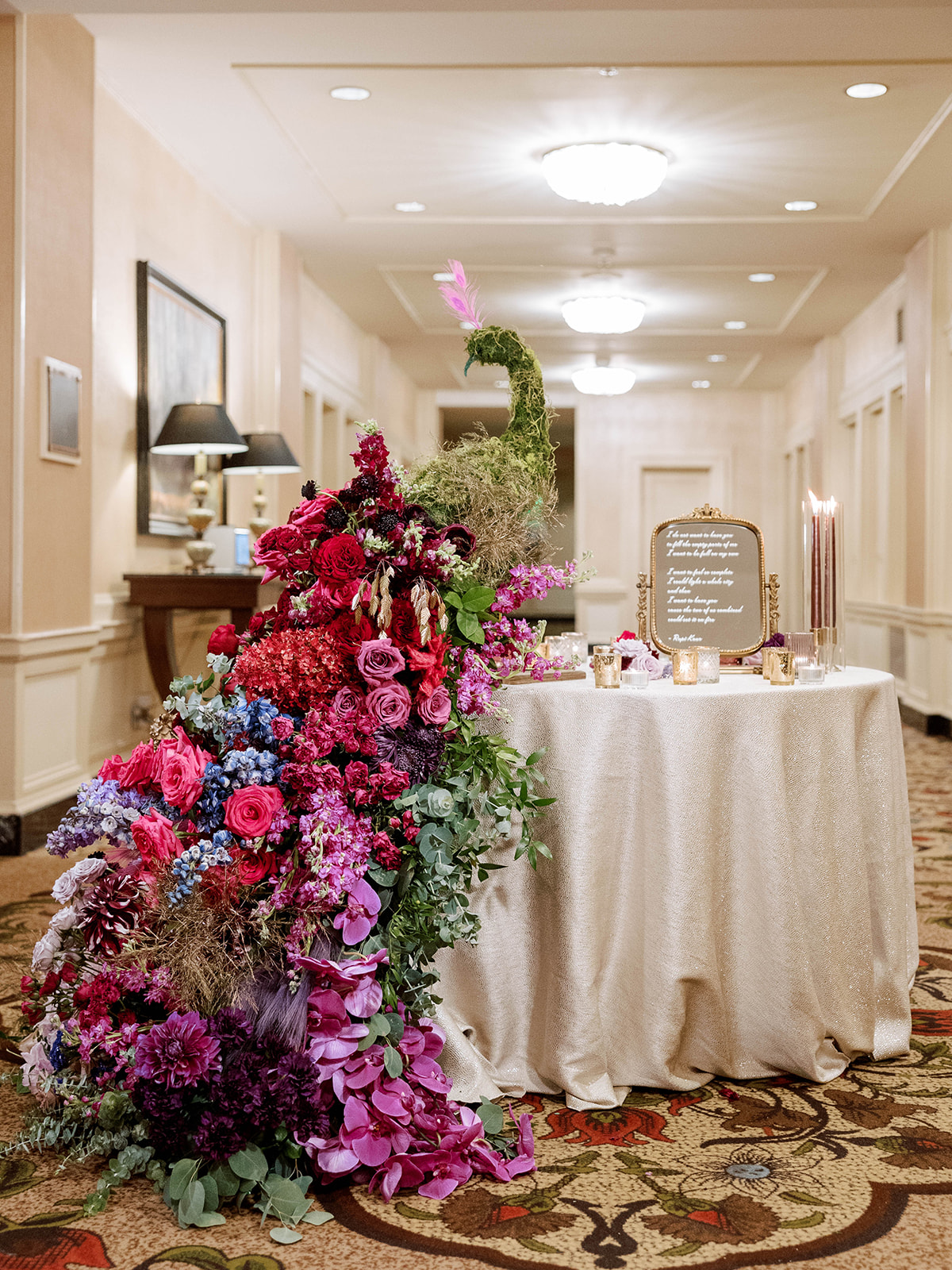
One of the stranger realities of working in the wedding industry is that florists are often expected to explain and defend the existence of pricing in a way few other professions are asked to do.
There is a common cultural narrative right now that attaching the word “wedding” to anything automatically inflates the price unfairly. And to be fair, people have encountered enough disappointing experiences — across photography, florals, planning, catering, rentals, beauty services — that some skepticism is understandable. Social media has made it extraordinarily easy for almost anyone to present themselves as an expert overnight. Beautiful branding can conceal inexperience. A styled shoot can create the illusion of an established portfolio. When couples invest significant amounts of money into one enormously important day, disappointment understandably feels personal.
But flowers themselves are often misunderstood too.
Fresh flowers are not static products sitting indefinitely on shelves. They are living materials moving through an extremely fragile global supply chain. Most wedding flowers have already traveled thousands of miles before they ever arrive at a florist’s studio. Roses come from Ecuador and Colombia. Tulips come from Holland. Ranunculus come from Japan and Italy. Orchids arrive from Thailand. Their pricing fluctuates constantly based on weather, fuel costs, labor conditions, crop availability, shipping delays, import logistics, holidays, and global demand.
Flowers arrive by plane. They move through refrigerated warehouses and distribution systems. They are highly perishable. A delayed shipment or heat event can alter availability overnight.
And unlike many products, flowers continue changing after arrival.
A florist is not simply purchasing objects. We are purchasing materials that open, bruise, hydrate, collapse, discolor, reflex, stretch toward light, respond to temperature, and sometimes fail unexpectedly despite careful handling. Part of professional floral work is knowing how to anticipate those behaviors before they happen.
This is one reason experience matters so much.
A good florist is not merely selecting pretty flowers. They are building systems of contingency constantly in the background:
- ordering with weather in mind
- accounting for breakage and product loss
- conditioning flowers properly upon arrival
- sourcing replacement materials when farms underperform
- timing bloom stages precisely for event day
- understanding which flowers can survive installation conditions and which cannot
- balancing color, movement, proportion, and longevity simultaneously
There is also a profound difference between arranging flowers casually and designing for weddings at scale.
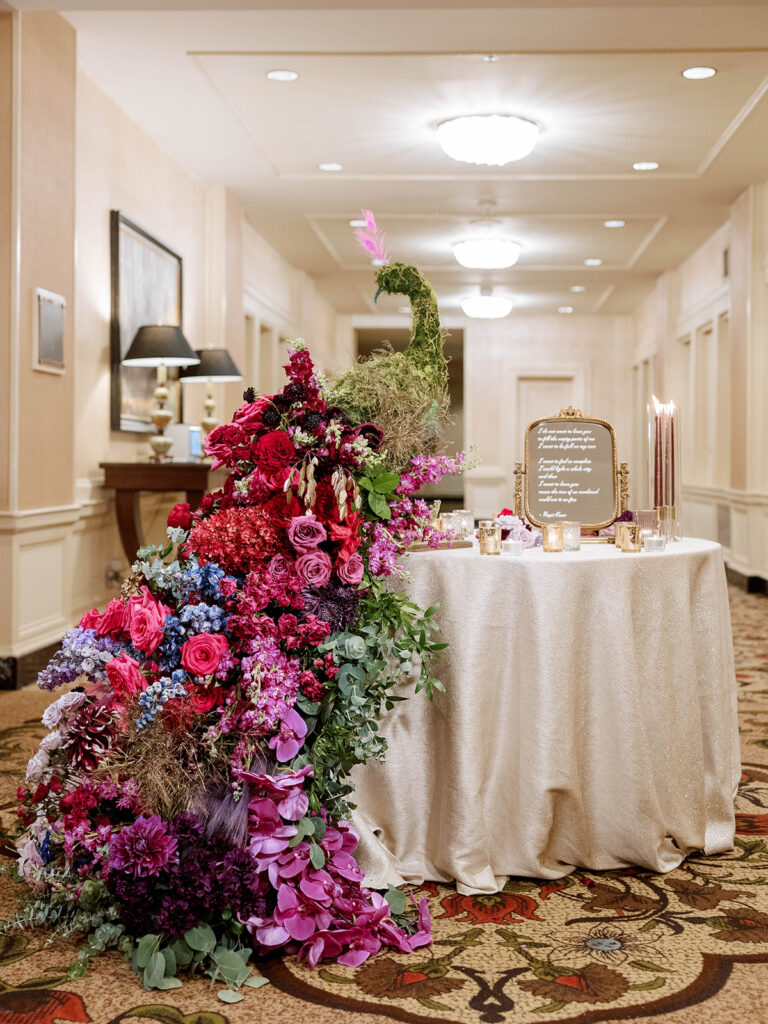
Photo by Lauren Renee
A wedding florist is responsible not only for aesthetics, but for logistics. Installations must survive transport, weather, timing constraints, venue restrictions, changing guest counts, setup windows, and the physical realities of large events. Florists begin their work days before a wedding and continue through late-night breakdowns after guests have left. Behind a finished arrangement are countless invisible hours: proposal writing, sourcing, ordering, recipe planning, mechanics preparation, transportation, staffing, conditioning, processing, cleanup, and problem-solving.
Much of what couples are actually paying for is risk management.
They are paying for someone who knows what happens when the white garden roses arrive too open in a July hot spell. They are paying for someone who knows which flowers collapse under the sun in an outdoor ceremony. They are paying for someone who understands how candlelight shifts color perception at night. They are paying for someone who can pivot calmly when a shipment fails forty-eight hours before an event.
And importantly, they are paying for trust.
A good florist creates emotional steadiness during a process that is often overwhelming. Couples should not have to wonder whether bouquets will arrive, whether installations will stand safely, whether the flowers will look cohesive in person, or whether the room will feel the way they imagined it might.
The best wedding professionals are not selling luxury for luxury’s sake. They are selling competence, consistency, care, and the ability to translate emotion into physical atmosphere.
Of course, not every expensive wedding vendor is excellent. Some work is overpriced. Some businesses overpromise. Some portfolios are misleading. But the existence of poor work does not mean expertise itself lacks value.
In many ways, truly good floral design is difficult to notice because it feels effortless once completed.
The room simply feels beautiful. Calm. Alive. Balanced. Intentional.
But behind that apparent ease is usually years of accumulated knowledge, physical labor, visual discipline, logistical coordination, and the management of thousands of living materials that had to arrive at exactly the right moment, in exactly the right condition, for only a few brief days of beauty.


