
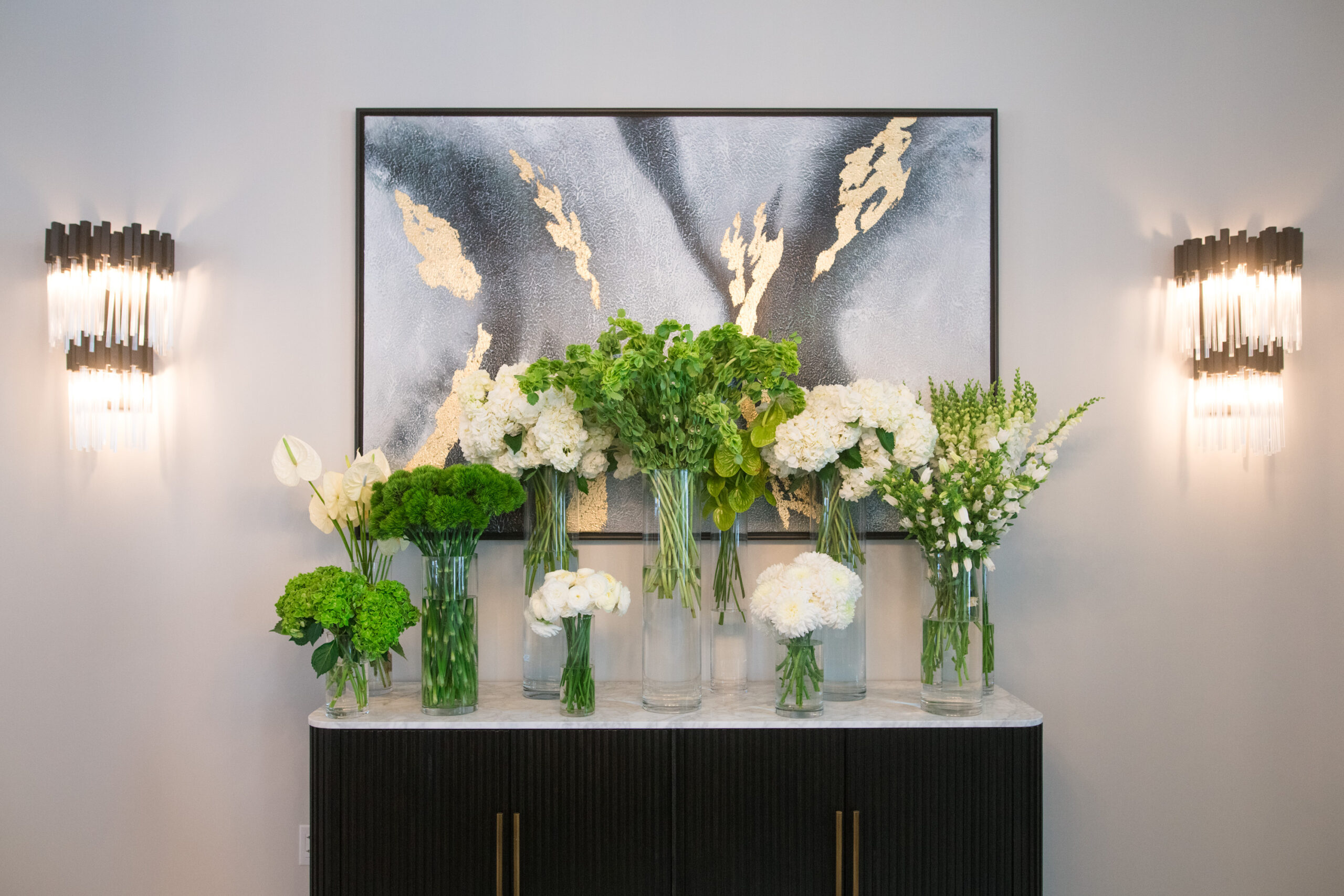
Long before anyone consciously notices flowers in a hotel lobby, they have already felt their effect.
A guest entering a space registers atmosphere almost immediately. The lighting, the scent, the scale of the room, the texture of materials, the pace of movement — all of it begins shaping perception before a single interaction occurs. Flowers operate within this language quietly but powerfully. They communicate care. Attention. Warmth. Seasonality. Refinement.
Hospitality begins long before anyone speaks.
This is why flowers in public spaces matter so much.
The best hospitality florals do not feel like decoration applied after the fact. They feel integrated into the architecture and emotional tone of a space. A severe modern lobby may require sculptural branches and restraint. A historic hotel may invite fullness, softness, layered textures, and movement. In restaurants, flowers often function differently again — more intimate, lower, closer to the scale of the table and the human body.
The goal is rarely simply “beautiful flowers.”
The goal is emotional calibration.
Flowers tell people, often subconsciously, how a space intends to care for them.
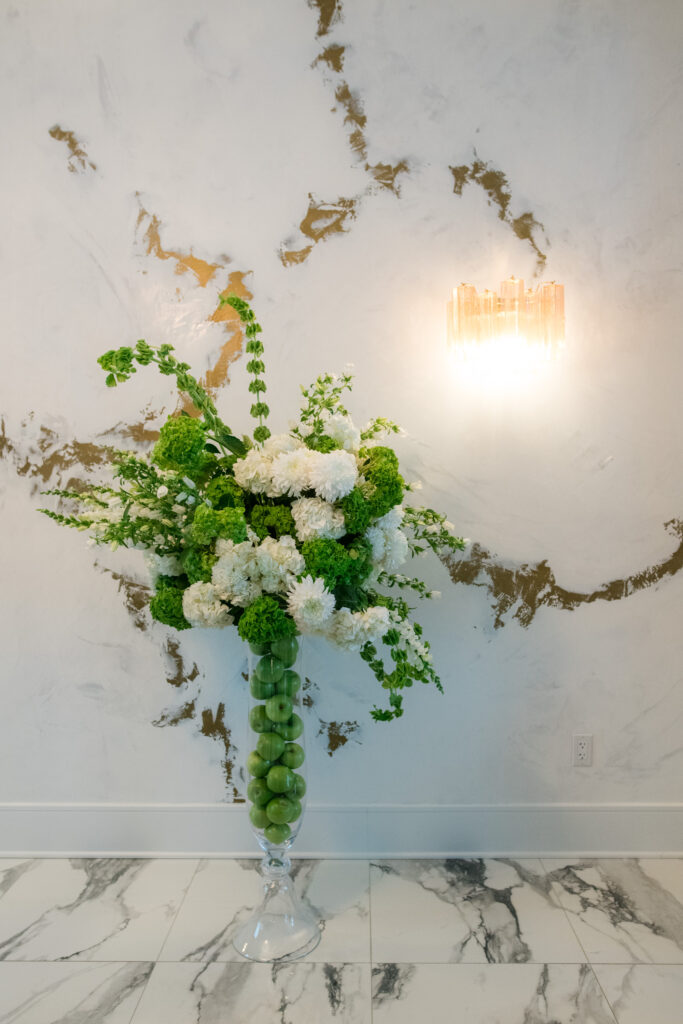
There is also something uniquely humanizing about flowers in public environments. Hotels, corporate buildings, restaurants, and event spaces can easily become transactional. Flowers interrupt that feeling. They introduce seasonality and impermanence into spaces otherwise dominated by hard surfaces and controlled systems. A branch beginning to open, a fading garden rose, the scent of lilac carried through a lobby for only a few days — these things remind people, however briefly, that they are not moving through a purely manufactured environment.
And importantly, flowers alter movement.
People slow down near them. They gather around them. They photograph them. They orient themselves by them. A large floral installation in the center of a lobby naturally becomes a visual anchor point. Smaller arrangements at a host stand or bar soften transitions and invite people inward. Even those who claim not to notice flowers often notice the feeling created in their absence.
The most effective hospitality florals also understand restraint.
Luxury rarely comes from excess alone. In fact, overly complicated floral work can make a space feel visually anxious. Some of the most successful public arrangements rely on fewer materials, stronger silhouettes, cleaner palettes, and careful attention to proportion. Flowers must leave room for the architecture itself to breathe.
This is especially true in hotels.
A hotel lobby functions simultaneously as arrival point, waiting room, gathering place, thoroughfare, and first impression. The floral work within it must feel alive without becoming disruptive. It should create atmosphere while still allowing the larger experience of the space to unfold naturally.
What I find most compelling about flowers in hospitality settings is that their work is partly invisible.
People may not remember the exact arrangement they passed in a lobby two years ago. But they remember how the hotel felt. They remember warmth. Ease. Elegance. Calm. Celebration. Flowers help construct those memories quietly in the background.
And in a culture increasingly dominated by speed, screens, and sterility, there is something deeply meaningful about encountering living things arranged with care in shared public spaces.
Flowers remind people that attention still exists.


