
One of the great pleasures of spring is that the garden begins offering enough material to stop arranging flowers formally and start living with them more casually again.
By the first week of May, the garden is not yet abundant in the extravagant way it becomes later in summer, but it is deeply nuanced. The colors are softer. The flowers feel fleeting. Everything still carries the excitement of first emergence.
For my niece’s birthday dinner this spring, I cut nearly everything for the table directly from the garden that afternoon.
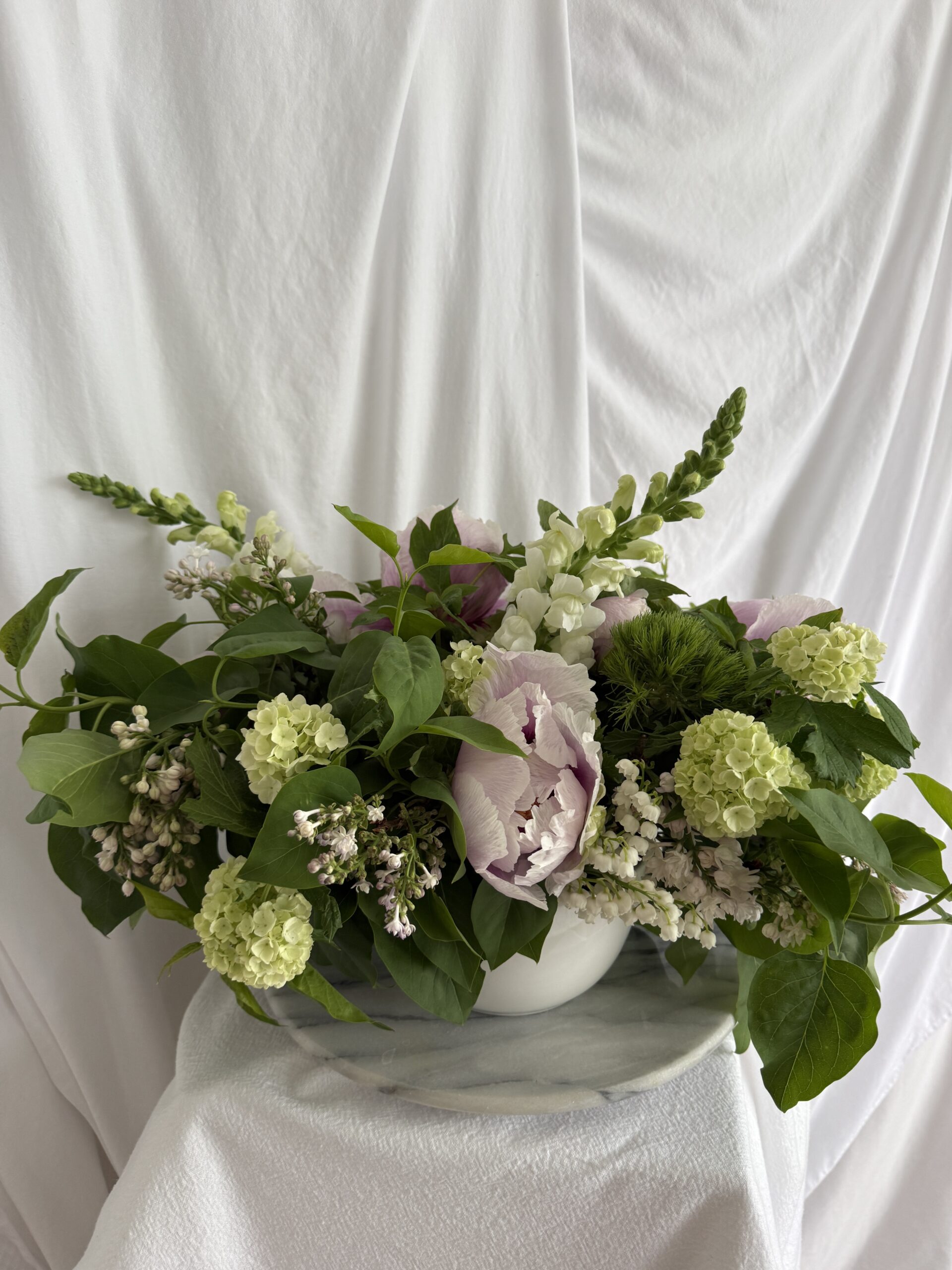
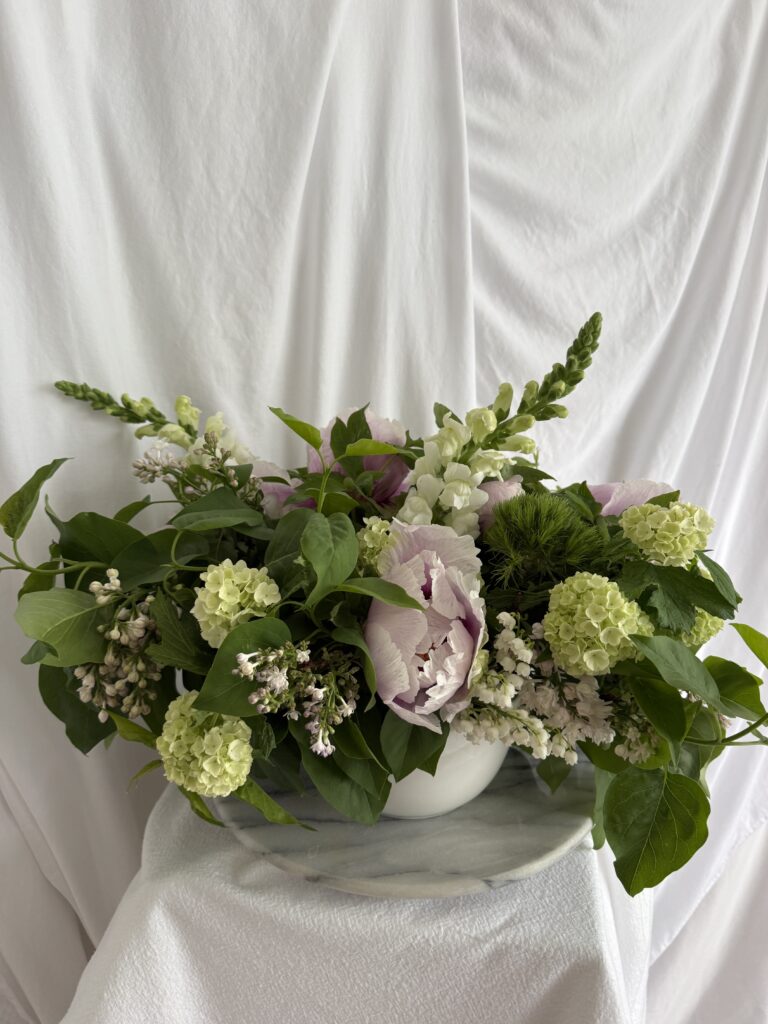
The arrangements themselves were intentionally small — two low bowl centerpieces placed down the center of the table with taper candles surrounding them. I didn’t want the flowers to dominate the evening. I wanted them to create atmosphere quietly, almost the way a good soundtrack operates in a film: present enough to shape the feeling of the room, subtle enough that no one is consciously analyzing it.
The palette emerged naturally from what was blooming.
White lilacs formed the backbone of the arrangements, carrying both fragrance and movement. Their branching habit allows an arrangement to feel generous very quickly, and in spring I often prefer that looseness to anything overly compact or formal. The lilac foliage itself is beautiful as well — soft green, slightly heart-shaped, relaxed.
I added several varieties of hellebores, some pale green-white and others washed with muted plum and smoky lavender tones. Hellebores are among the most emotionally complex flowers in the garden to me. They never feel loud. They seem to belong to shadow and rain and transitional weather. Even their posture — slightly bowed, slightly inward — feels contemplative.
A few stems of lily of the valley moved through the arrangements almost invisibly, tucked low where guests would occasionally catch their fragrance unexpectedly while seated at the table. Spring Spanish bells added another layer of movement, weaving blue-violet tones through the softer whites and greens.
And then there were the tree peonies.
Only a few had opened enough to cut, which made them feel all the more special. Tree peonies possess a scale and delicacy that is difficult to explain to someone who has never grown them. They feel almost unreal when they first open — petals like silk paper, impossibly large blooms suspended on woody stems that survive winter like small flowering shrubs.
The overall effect of the arrangements was restrained but alive: greens, whites, pale violets, soft plum tones, candlelight beginning to warm everything toward evening.
This is the kind of floral work I increasingly love most at home.
Not perfection. Not overproduction. Not flowers arranged to impress anyone online.
Just the experience of walking through the garden, noticing what is ready, bringing it inside, and allowing the season itself to shape the table.
There is a kind of luxury in that — in seasonality, in impermanence, in not forcing flowers to become something other than what they already are.
The food was delicious, the flowers were beautiful, and the laughs were plentiful!


