
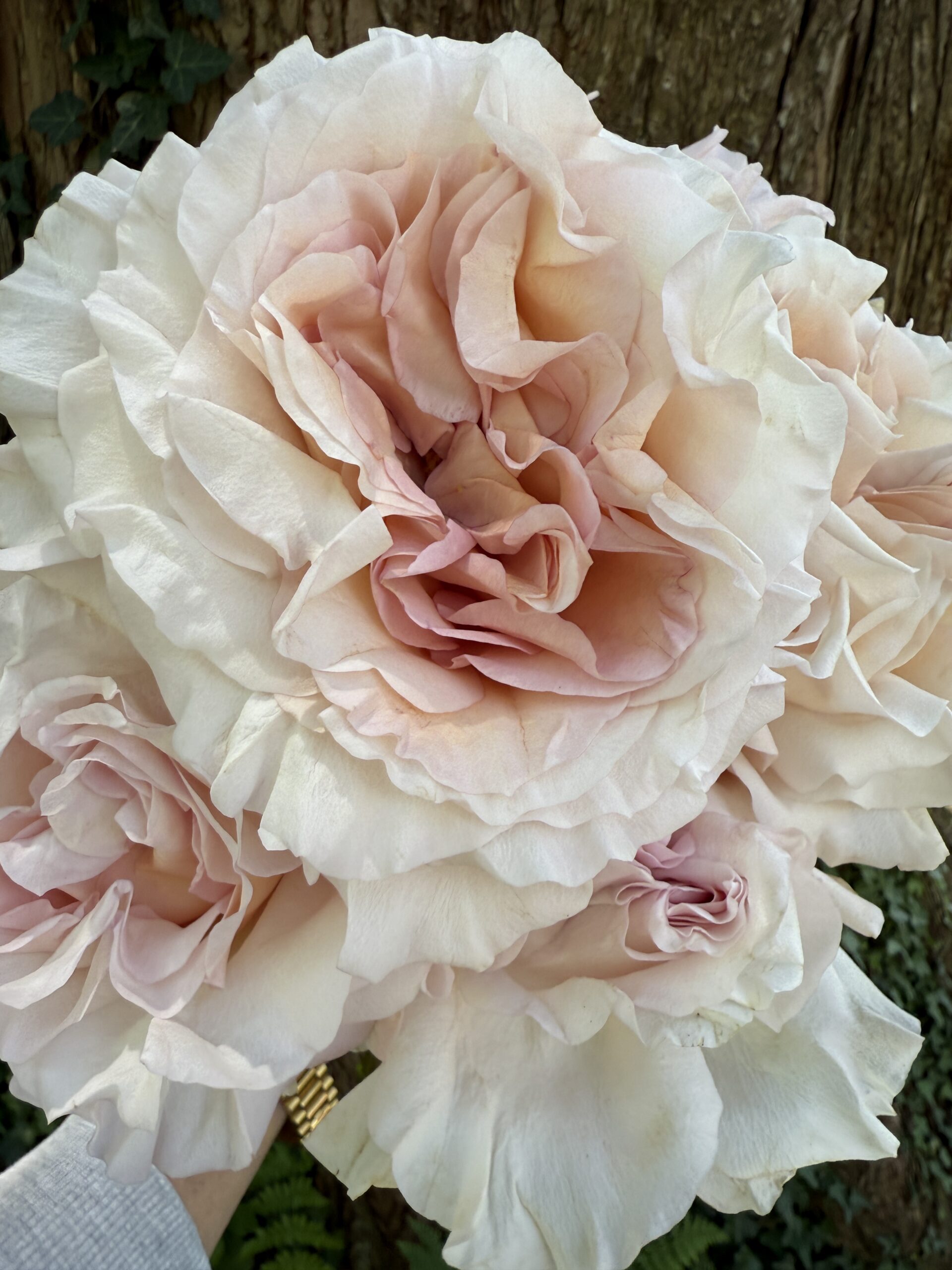
Every few years, a rose arrives that seems to appear everywhere at once.
Designers are whispering to each other about it. Growers are talking about it. Photographs are circulating around floral forums and Instagram feeds. Suddenly everyone is asking the same question:
“What rose is that?”
This season, that rose may well be ‘Powder Puff.’
At first blush (heh), ‘Powder Puff’ belongs to a family of flowers that has become increasingly popular in wedding design: large-headed, heavily-petaled garden roses in soft shades of blush pink. But what distinguishes it from many of its predecessors is not simply its color. It is the way the bloom opens.
Given time and care, Powder Puff unfurls into a truly extraordinary flower. Layers upon layers of finely textured petals spiral outward from a cool blush center, eventually creating a bloom of remarkable size and complexity. Fully opened, individual flowers can be nearly the size of a dinner plate, with a softness and movement that recalls a peony more than a traditional rose.
The color is equally compelling.
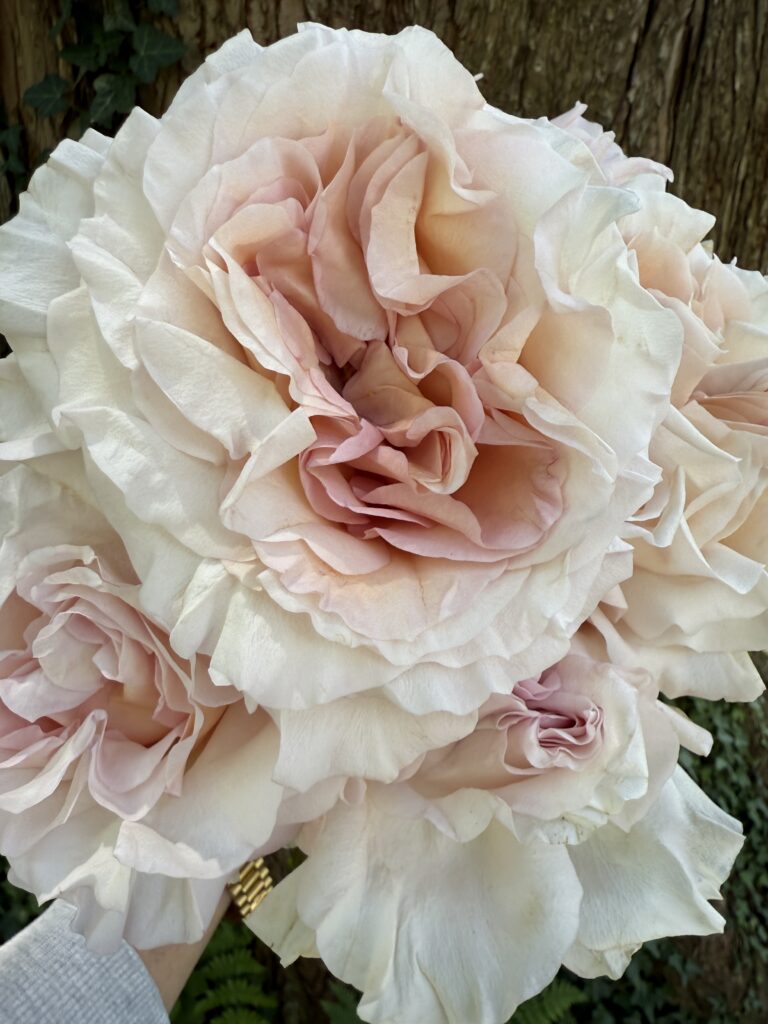
Many pink garden roses lean warm, carrying notes of peach, apricot, or cream. Powder Puff remains noticeably cooler. Its undertones include hints of lavender and shell pink, allowing it to pair beautifully with modern palettes built around mauve, lilac, dove gray, dusty rose, and soft ivory.
For designers, these distinctions matter.
Color is rarely just color. Temperature, saturation, depth, and texture all influence how a flower behaves within a design. Two roses may both be described as “pink” and create entirely different effects when placed beside one another. A cool pink can feel restrained and sophisticated. A warm pink can feel exuberant and romantic. Understanding those differences is often what separates a good palette from a truly next-level one.
This is one reason new flower varieties continue to generate so much excitement within the floral world. Each introduces a slightly different possibility: a new shape, a new color, a new way of creating atmosphere.
‘Powder Puff’ feels particularly promising because it offers something increasingly difficult to find—a flower that feels at once familiar and new. It possesses the fullness and romance that couples love, but its coloration and form distinguish it from many of the garden roses that have dominated wedding design for the past decade.
Whether it becomes a lasting classic remains to be seen. Floral trends, like all aesthetic trends, evolve. New varieties emerge. Old favorites return. Designers rediscover flowers that have been overlooked for years.
But for now, ‘Powder Puff’ is a rose worth paying attention to.
And in a studio especially obsessed with pink roses, that is saying something.


