
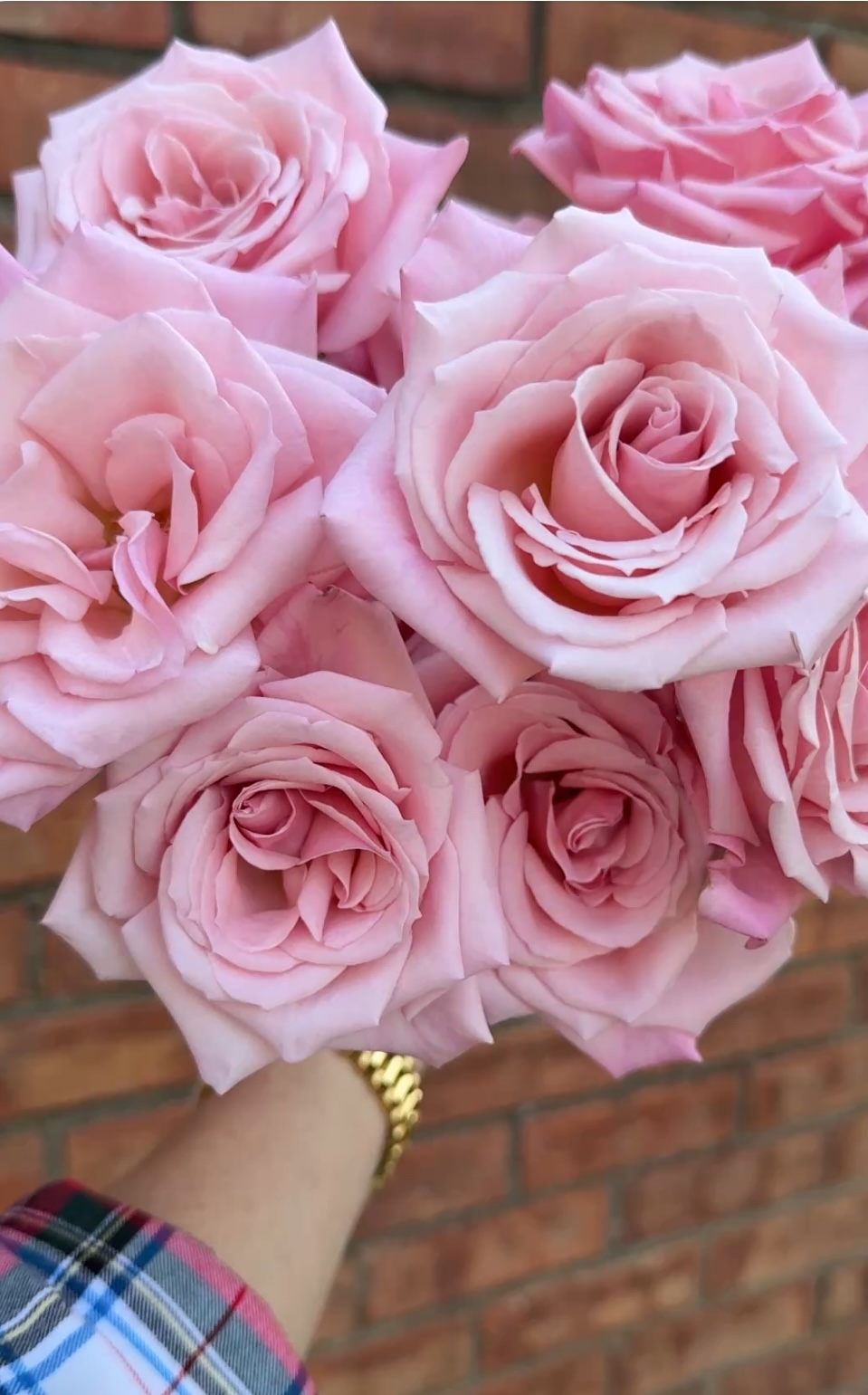
With Mother’s Day and our local proms just behind us, and our June, July, and August weddings ahead, one fact is jumping out at me: everybody continues to love pink roses! From cool, clear blushes through spicy hot magentas, pink roses are it, and I want to talk about my favorites. These are my champions. My heroes. My heavy lifters. These are the pink roses that never disappoint me.
And that’s no small feat because when it comes to floral design, pink is one of the most complicated color families. Some tones lean lilac and cool. Others carry peach, beige, coral, or mauve undertones that dramatically change how they behave in an arrangement. A rose that looks romantic beside cream complements can suddenly appear fluorescent next to cooler tones.
The difference is subtle until it isn’t.
I’m always trying new varieties, but one pink rose I always reach for is ‘Miss Piggy.’ She’s an absolute staple in my studio because she occupies that difficult middle ground between blush, peach, and warm pink without tipping too heavily into any one category. In some palettes she reads almost shell; in others she pulls distinctly peach. Her reflex is beautiful, bloom size is generous, and she opens consistently and reliably in a way that many roses do not.
‘Sweet Escimo’ occupies a very different territory all together. Softer and cleaner, she sits somewhere between blush and beige depending on what surrounds it. She works beautifully in restrained palettes where you want warmth without obvious peach tones. Beside White O’Hara, she feels creamy. Beside warmer garden roses, she sharpens considerably.
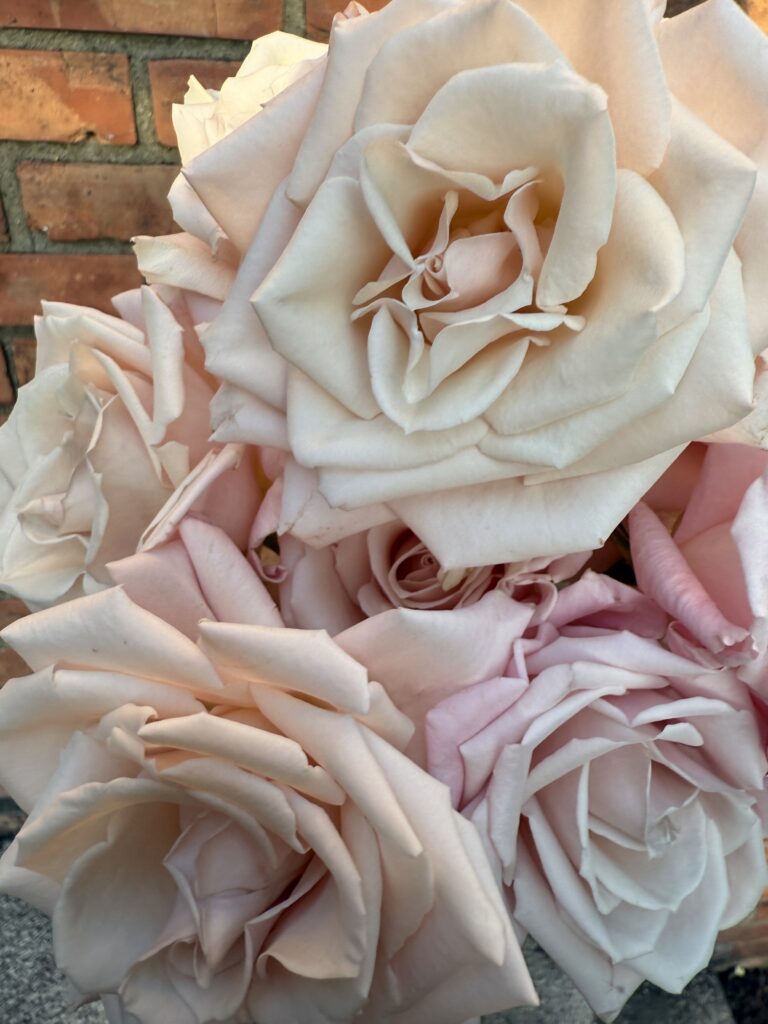
‘Sweet Escimo’ truly is so sweet.
‘Hot Escimo’ is still soft, but it trends much more towards candy-colored.
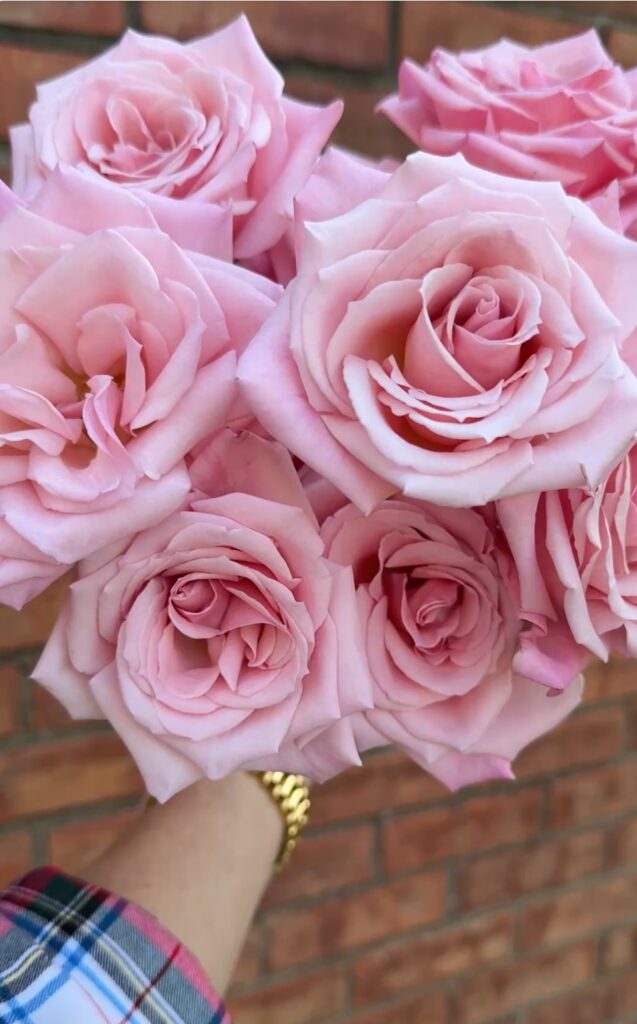
‘White O’Hara’ remains one of the most important roses in my luxury wedding work for good reason. She opens generously, carries an unmistakable and gorgeous fragrance, and reflects light beautifully. This rose is a soft blush-ivory warmth that becomes especially apparent in candlelight. ‘Pink O’Hara’ moves further into that truly pink territory, with a blush center that deepens as the bloom opens.
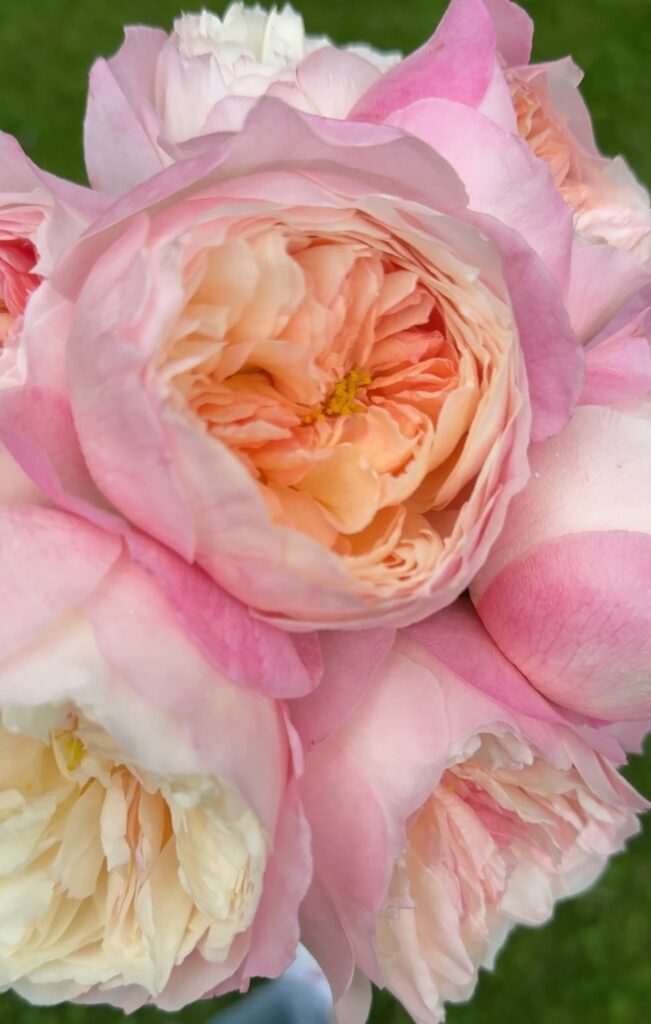
The David Austins are, of course, fully genius. ‘Kiera’ has an almost watercolor softness — delicate petal movement, gentle blush variation, and a shape that feels unmistakably garden-grown even when designed formally. ‘Constance,’ by contrast, feels more theatrical. Fuller, deeper, more saturated. She carries a kind of old-world romance that works beautifully in abundant spring designs.
Then there are the roses that bring a spicier energy into my flower room.
‘Pink Floyd’ remains one of the clearest examples of hot pink done well. This rose is unapologetically saturated, almost neon in certain lighting, but because the tone stays relatively clean, it can still feel sophisticated when paired carefully. ‘Cherry-O’ has a similar intensity but with a slightly warmer cast that pushes toward watermelon. ‘Full Monty’ enters even bolder territory — vivid, playful, enormous, impossible to ignore.
These roses require restraint around them. Strong color exposes weak composition immediately. A hot pink rose placed into an arrangement without enough breathing room can overwhelm everything around it. But when given structure and contrast — darker foliage, softer companions, negative space — they create extraordinary movement and tension.
‘Princess Hitomi’ is an excellent example of a modern pink-pink rose that photographs beautifully. She’s not aggressively pink, and she’s got a layered petal structure that reads luxurious without becoming overly precious. Hitomi has an almost luminous quality in natural light.
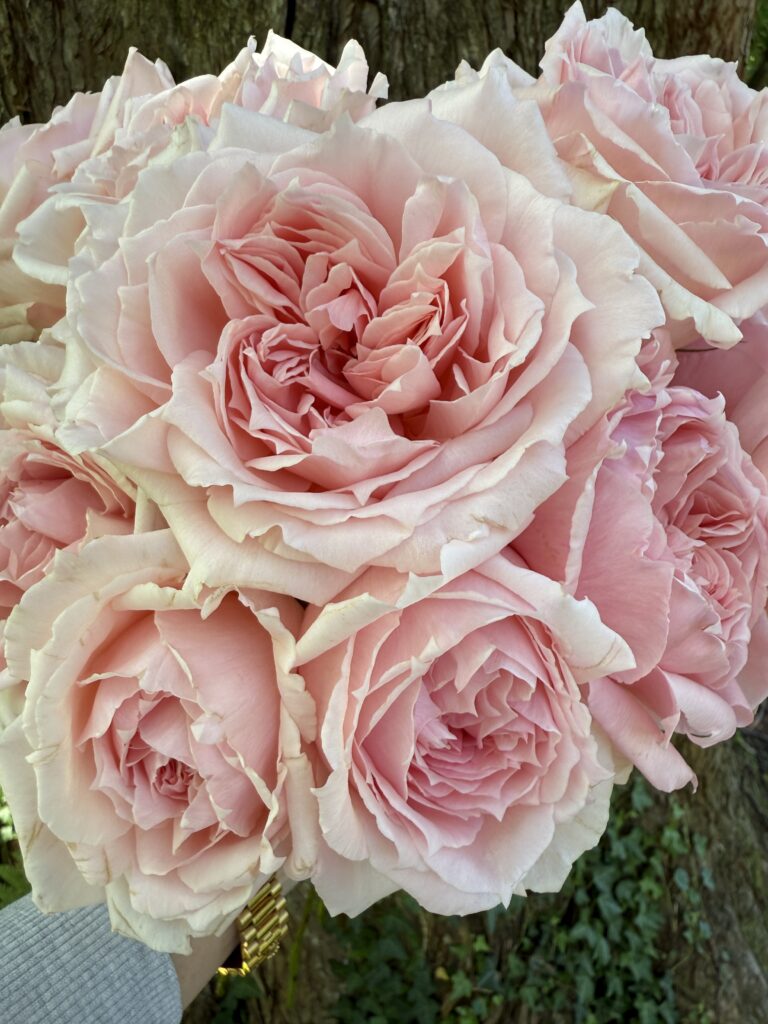
‘Princess Hitomi’
Some of the dreamiest pink roses in my cooler right now are actually sprays. Spray roses are special in that they bring an informality that larger roses cannot. They loosen a composition. They give it dimension and romance. ‘Fairy Kiss’ has been especially useful for transitional spring palettes. Smaller headed and more delicate than standard roses, this rose carries a softness that allows it to weave naturally through arrangements without becoming visually heavy. And then there is ‘Pink Majolica,’ which never really behaves like anyone expects. It opens quickly, moves dramatically, and refuses stiffness entirely. It has the kind of movement that designers either fall in love with or struggle to control. I fall firmly into the first category.
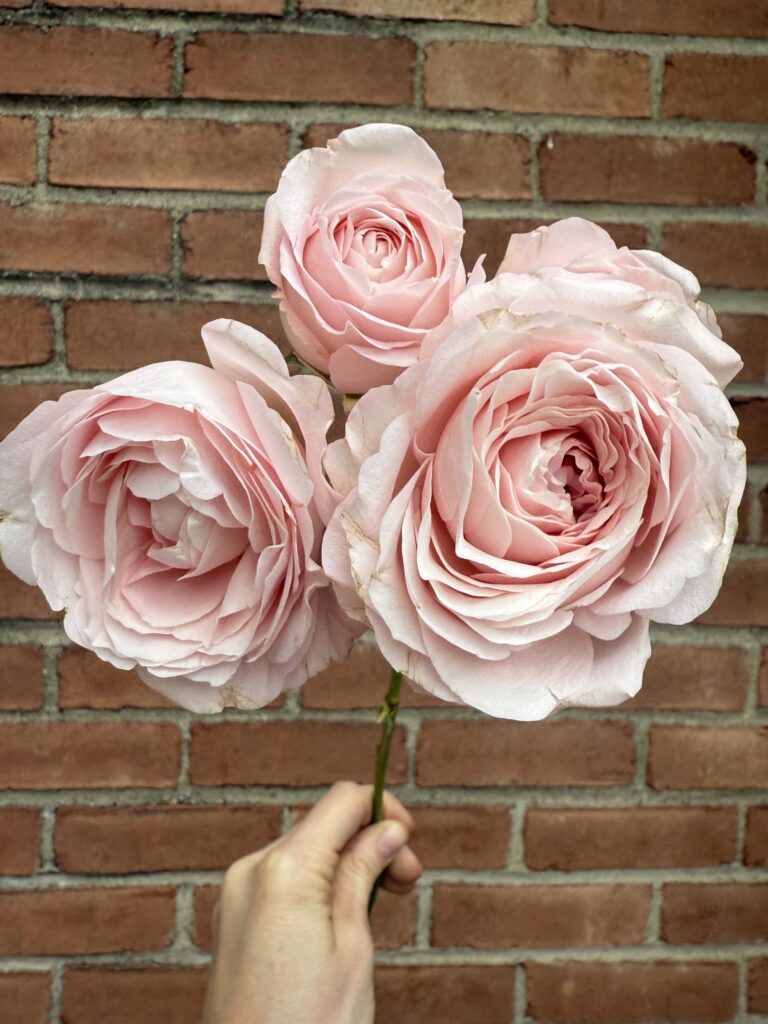
The spray rose ‘Fairy Kiss’
The longer I do this work, the less interested I become in choosing “the best” rose pink universally. They are relational, and their success depends entirely on context: the light in the room, the surrounding palette, the vessel, the season, the gesture of the arrangement itself. The same rose can feel contemporary in one composition and dated in another, but each of these varieties is repeatedly finding her way onto my flower table. These are the real ones. They’re opening beautifully in the studio each morning and quietly shaping my work.


